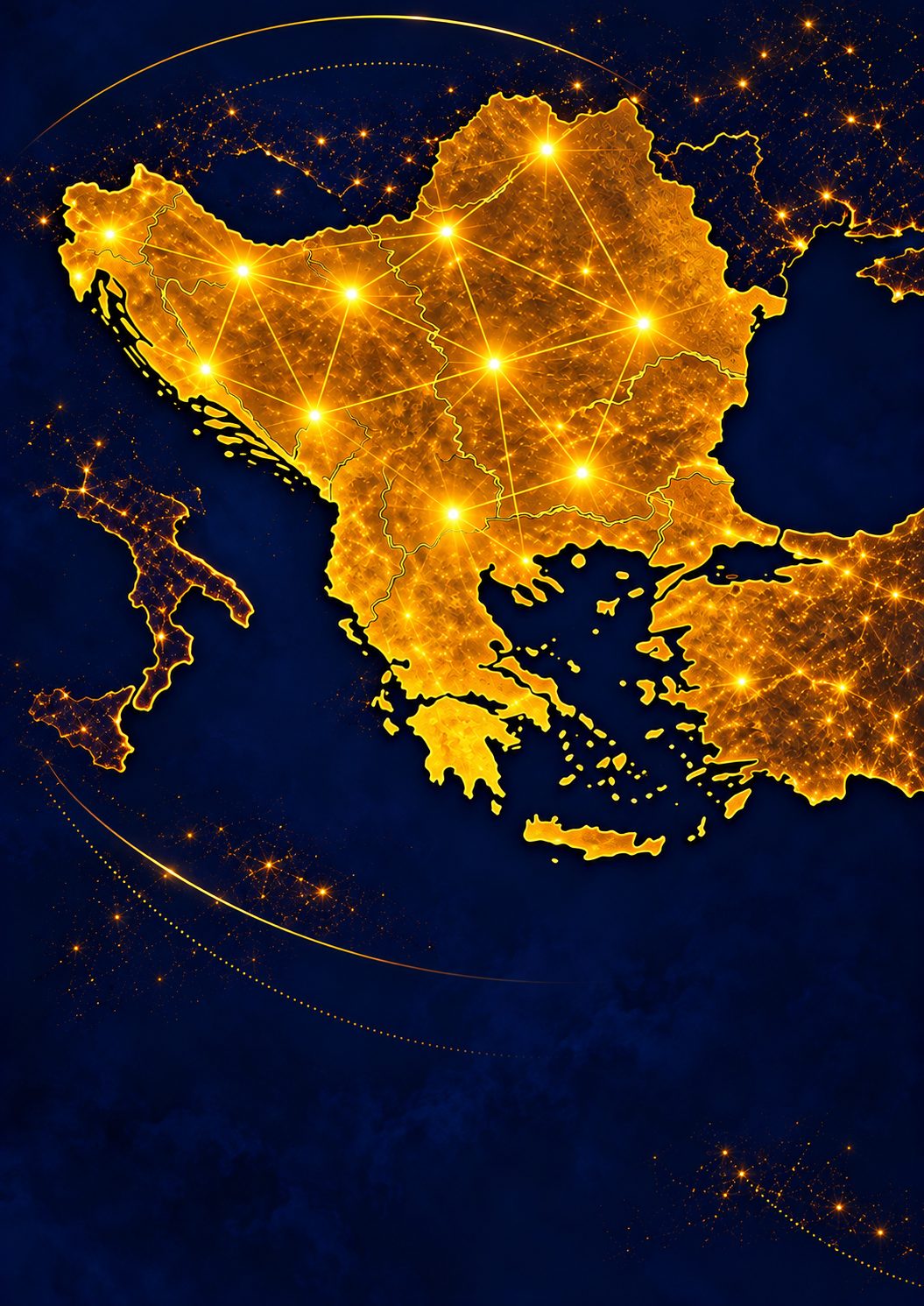


The Balkans are not a quiet market. They are fragmented, competitive and increasingly important for the gaming industry.
The period from Casino Operations Summit in Thessaloniki to the end of April outlined a denser picture: land-based activity, online expansion, new content deals, sportsbook technology, national and EU-level regulatory and tax pressure, certified content, a responsible gaming signal, live poker and preparation for new regulated online markets.
Greece: Thessaloniki sent a strong land-based signal
Between 21 and 23 April 2026, Casino Operations Summit 2026 took place at the Hyatt Regency Conference Center, Hotel & Casino Thessaloniki.
The format brought together land-based casino professionals from Europe and Africa and focused on casino operations, performance, player experience, marketing, technology, cabinets and the practical optimisation of the casino environment.
EGT was among the visible Bulgarian participants as Platinum Sponsor. Light & Wonder also used the event for meetings with operators and product discussions around the needs of the EMEA market.
This matters because Greece is not moving only through online licences and digital operators. Thessaloniki showed that the market also has serious land-based weight.
Amusnet: Greece as a performance-driven casino market
On 28 April, Amusnet published its post-event position after Casino Operations Summit.
The company focused on the Greek land-based sector: operator needs, cabinet performance, premium hardware, game content, jackpots, performance optimisation and long-term operational support.
There is a strong Bulgarian B2B signal here: Amusnet is not simply exporting content. The company is entering the conversation around physical casino infrastructure, cabinets, player value and real operator efficiency in Greece.
Greece: Superbet enters with Bragg's support
On 30 April, Bragg Gaming Group announced that it is supporting Super Technologies in Superbet's entry into the regulated Greek market.
Bragg provides RGS content and HUB aggregation offering. The important detail is that Superbet has already built a local presence in Athens over the past 12 months.
This is not just the entry of an external operator. It is a more serious model: local team, localised product, sportsbook identity and iGaming expansion.
Greece: Spinmatic, Fonbet and BGaming add a content layer
On 30 April, Spinmatic announced a strategic partnership with Fonbet.gr, adding its slot content to the operator's casino offering, with additional activities such as missions, bonus campaigns and tournaments.
On the same day, BGaming announced a partnership with Entain, with Greece included in the rollout alongside Brazil, Spain, Italy and Portugal.
So, within only a few days, Greece appeared across several lines at once: a land-based event, Bulgarian suppliers, operator market entry, aggregation, slot content and a global content rollout.
Croatia: SuperSport enters a deeper CEE sportsbook technology framework
On 27 April, Huddle and Entain CEE announced a bespoke trading system for tennis, basketball and football.
The system is already live through STS in Poland and SuperSport in Croatia. This is not a standard odds feed, but a jointly developed trading platform combining Entain CEE's internal trading knowledge with Huddle's modelling and automation systems.
For Croatia, this is an important B2B signal. SuperSport should no longer be seen only as a local operator, but as part of a wider CEE technology strategy where proprietary pricing, player props, micro markets and BetBuilder become key competitive tools.
Romania: Soft2Bet launches Zinx
On 28 April, Soft2Bet launched Zinx in Romania.
Zinx is a new digital platform combining online casino and sports betting for Romanian players. The product is built around localisation, UX, player preferences, casino content, sportsbook and the MEGA gamification engine.
After Don.ro and Swiper, Zinx points to Soft2Bet's expanding multi-brand strategy in one of the most competitive regulated markets in the region.
The conclusion is clear: despite regulatory and tax pressure in Romania, international operators continue to invest, but they are doing it through more localised and more differentiated products.
Romania: ONJN increases pressure on the black market
On 27 April, the first year of ONJN's mandate was reported for the period April 2025 to April 2026.
The regulator issued more than 60 orders to remove illegal gambling content and added more than 300 unlicensed sites to its blacklist.
Around 11,000 inspections, 70 criminal complaints, 60 revoked licences and 260 disabled or confiscated devices were also reported.
This makes Romania the clearest regulatory stress test in the Balkans. The full regional conflict is visible there: regulated growth, taxation, black market, player protection, digital control and pressure on unlicensed operators.
Bulgaria: CT Interactive and a responsible gaming signal
On 24 April, CT Interactive announced that it had expanded its certified portfolio for the Bulgarian regulated iGaming market with 20 new titles.
Among them are new games from the Diamond Tree Jackpot line, including HOT 7's X2 Diamond Tree and Wild Clover Diamond Tree, as well as titles from the Clover line.
This is a quiet but important B2B story. It supports the thesis that Bulgaria should not be viewed only as an operator market, but as a supply hub for content, technology, certified products and international expansion.
In parallel, Bulgaria also gave a responsible gaming signal: on 28 April, caretaker Minister of Health Assoc. Prof. Mihail Okoliyski announced a fund for the prevention, treatment and therapy of gambling addiction.
Regional distribution: ICONIC21 and Hub88
On 28 April, ICONIC21 announced a full-portfolio integration with Hub88.
The deal includes live casino, slots and virtual games through the Hub88 Casino API. ICONIC21 stated that the portfolio is already live with several operators in the Hub88 network, with additional rollouts planned in the coming weeks.
This is not a purely Balkan story in itself, but it is important for the region because it shows how content suppliers scale through aggregation infrastructure.
For the Balkans, this has direct relevance: markets are fragmented, but content distribution is becoming increasingly networked, fast and multi-market.
Albania: live poker and preparation for online betting licensing
On 29 April, Tirana International Cash Festival started at MAK Albania, running from 29 April to 4 May 2026.
This is not a corporate B2B deal, but it is an important live poker and gaming tourism signal. Albania rarely appears in major iGaming headlines, but formats like this show that the region also has a live layer: players, travel, poker rooms, hotels, cash game formats and event potential.
Albania also gave a regulatory signal. On 30 April, Finance Minister Petrit Malaj stated that two by-laws remain before the licensing process for online sports betting can continue. This places the country on the watchlist for a future regulated opening of the online betting market.
Slovenia: a small but interesting market signal
Slovenia also enters the radar, but more as a market watch than a leading story.
On 23 April, N1 Partners published an analysis presenting Slovenia as a promising GEO for iGaming affiliates. The focus is on low competition, a high-spending audience, mobile traffic and the opportunity for stronger localisation.
This is not a regulatory change, operator expansion or major B2B partnership. But it is a useful signal that even smaller markets in the region are starting to be assessed through performance marketing, affiliate traffic and long-term digital potential.
European watch: online gaming enters the EU budget conversation
On 28 April, in the European Parliament's position on the 2028–2034 Multiannual Financial Framework, online gaming and gambling were mentioned as a possible basis for a new own resource for the EU budget, alongside a digital levy and a resource based on crypto transactions.
This is not an adopted tax, but a political and technical signal inside the wider EU budget debate.
For the Balkans, the point is important because it shows that tax pressure on online gaming is no longer only a national issue. The topic is starting to enter the broader European conversation around public finance, digital markets and regulated industries.
BGF: first institutional signals
At the end of April, Balkan Gaming Federation showed why such a regional structure can have real weight.
The federation has already sent its first official positions to institutions in Montenegro and Romania. In Montenegro, the issue is the planned 12% tax on gambling winnings, which, according to the legal sector, could increase pressure on the regulated market. In Romania, the focus is on the role of municipalities in approving or restricting gaming venues.
This is an important moment: BGF is not remaining only an idea for regional cooperation. It is starting to act on concrete regulatory issues affecting markets, operators, associations and the legal gaming industry in the Balkans.
Serbia: Belgrade as an institutional point for BGF
Serbia does not enter this brief as a confirmed April story about a specific company or product, but as an important upcoming institutional and B2B signal.
Belgrade has already hosted the signing of the Memorandum for the creation of Balkan Gaming Federation. Now the city is expected to host the next important step: the review and vote on the federation's founding statute.
This is expected to take place around Belgrade Future Gaming 2026, which will be held on 26–27 May at Belgrade Fair, Hall 4.
In this sense, Belgrade is becoming more than just an event point in the calendar. It is becoming a place where the regional association process starts to gain structure: first a memorandum, and then a future statute.
The bigger picture
Greece was the most active point in the period: Casino Operations Summit in Thessaloniki gave land-based weight, Amusnet set a performance-driven casino direction, Superbet entered with Bragg's support, Spinmatic launched with Fonbet.gr and BGaming included Greece in the Entain rollout.
Croatia showed a strategically important sportsbook technology signal through SuperSport, Entain CEE and Huddle.
Romania remained the major regulatory and product stress test: Soft2Bet invested in a new local brand, while ONJN tightened control over unlicensed operators and illegal content.
Bulgaria showed two different lines: B2B capacity through CT Interactive's certified content and a responsible gaming signal through the new fund for prevention, treatment and therapy of gambling addiction.
Albania added live poker, gaming tourism and a real regulatory watch for online sports betting.
Slovenia entered the radar as a smaller but interesting affiliate and market opportunity.
At the European level, the budget debate around possible new own resources adds another layer: online gaming is starting to appear not only as a national regulatory topic, but also as part of the wider EU conversation on taxation, digital markets and regulated industries.
BGF adds an institutional layer with its first official positions on concrete regulatory issues in Montenegro and Romania.
Serbia remains the next institutional stop for BGF in May, when the federation is expected to make an important organisational step around Belgrade Future Gaming.
Despite the region's problems with black market activity, tax pressure and regulatory restrictions, the Balkans are becoming one of the next important B2B corridors of the European gaming industry.
The region already has local champions, international operators, strong suppliers, developing partnerships and an increasingly visible institutional voice.
The European layer makes this picture even more relevant.
That is why the Balkans can no longer be treated as separate small markets.
They are beginning to align as a common business territory that will matter more and more for the development of the industry in Europe.